
 EN
EN
 English
 Español
 Français
 Português
 عربى
عربى
What Do Buyers Care About When Choosing a Wire Drawing Machine?
Content
- 1 Why Wet Wire Drawing Specifically?
- 2 Drawing Speed and Production Capacity
- 3 Lubrication System Design and Emulsion Management
- 4 Die Box Construction and Die Life
- 5 Capstan Design, Drive System, and Tension Control
- 6 Wire Break Detection and Automatic Stopping Systems
- 7 Key Specifications Buyers Compare Side by Side
- 8 Maintenance Accessibility and Spare Parts Availability
- 9 Energy Efficiency and Total Cost of Ownership
Purchasing a wet wire drawing machine is a significant capital investment, and buyers — whether they run a small wire mill or manage a large-scale production facility — rarely make that decision based on a single specification. The reality is that experienced procurement managers and engineers evaluate a combination of technical performance, operational reliability, maintenance demands, and long-term cost efficiency before committing. This article walks through the specific factors that matter most to buyers, with enough practical detail to help you ask the right questions when sourcing your next machine.
Why Wet Wire Drawing Specifically?
Before diving into selection criteria, it's worth clarifying what distinguishes wet wire drawing from dry drawing. In a wet wire drawing machine, both the wire and the dies are fully submerged in or continuously flooded with liquid lubricant — typically an emulsion of water and specialized drawing compounds. This approach is essential for fine wire production, typically below 0.5 mm in diameter, because the liquid lubricant provides far more effective cooling and lubrication than powder-based systems used in dry drawing.
The industries that rely most heavily on wet drawing machines include tyre cord and bead wire manufacturing, spring wire production, stainless steel fine wire, copper and aluminum magnet wire, and welding wire. Each of these applications demands a slightly different machine configuration, which is precisely why buyers tend to scrutinize technical specifications rather than simply comparing price tags.
Drawing Speed and Production Capacity
The most visible performance metric for any wet wire drawing machine is its maximum drawing speed. Machines are typically rated by the exit speed of the finished wire from the last capstan, measured in meters per minute. Entry-level multi-die wet drawing machines may operate at 400–600 m/min, while high-performance machines for fine copper or steel wire can reach 1,500–2,500 m/min or higher on the final block.
However, buyers with manufacturing experience know that rated maximum speed is not the same as sustainable production speed. Key questions to ask include how the machine performs continuously at 80–90% of its rated speed, what the acceleration and deceleration profiles look like during spooler changeover, and whether the control system allows for smooth speed ramping to prevent wire breaks. A machine that theoretically reaches 2,000 m/min but breaks wire frequently above 1,600 m/min delivers lower actual throughput than a conservatively rated machine running consistently.
Buyers also evaluate the number of dies (drawing stages) a machine supports. Common configurations range from 12 to 25 dies for fine wire machines, with each die progressively reducing wire diameter. More drawing stages per machine means better reduction ratios, fewer annealing passes, and lower total energy cost per kilogram of wire produced.
Lubrication System Design and Emulsion Management
The lubrication system is the heart of any wet drawing machine, and it receives close attention from technically informed buyers. The quality of lubrication directly affects surface finish of the drawn wire, die wear rates, wire break frequency, and the temperature stability of the drawing process. A poorly designed lubrication circuit can turn an otherwise capable machine into a maintenance headache.
Buyers look for machines with closed-loop recirculating emulsion systems that maintain consistent temperature — usually controlled between 30°C and 50°C — through integrated heat exchangers or chillers. The volume of the emulsion tank matters too; a larger reservoir provides better thermal buffering and longer emulsion service life before replacement is needed. Filtration is another critical detail: multi-stage filtration systems that remove metallic fines, wire fragments, and oxidation products extend emulsion life and protect die surfaces from abrasive contamination.
Some advanced machines include automatic emulsion concentration monitoring, with dosing pumps that maintain the correct oil-to-water ratio without manual intervention. This is particularly valued in high-volume production environments where maintaining emulsion chemistry manually is labor-intensive and error-prone. Buyers running stainless steel or high-carbon steel wire tend to place especially high importance on this feature because those materials are more sensitive to lubricant breakdown than softer non-ferrous wire.
Die Box Construction and Die Life
Die costs are a recurring operational expense in any wire drawing operation, and buyers factor die life heavily into the total cost of ownership calculation. The die box design — how the dies are housed, aligned, cooled, and accessed for replacement — significantly affects how efficiently a production team can maintain drawing geometry and switch out worn dies.
Modern wet drawing machines feature quick-release die boxes that allow a single operator to swap a die in under two minutes without special tools, minimizing downtime during scheduled die changes. The alignment precision of the die holder is equally important: misaligned dies cause uneven wire surface quality, accelerated die wear, and in severe cases, wire breaks that scatter wire through the machine and require lengthy rethreading procedures.
Buyers also evaluate compatibility with tungsten carbide and polycrystalline diamond (PCD) dies. Machines designed for fine wire consistently use PCD dies due to their longer service life and superior surface finish characteristics, but these require extremely precise mounting and alignment tolerances. If a machine's die holders have excessive play or wear quickly themselves, the investment in expensive PCD dies is partially negated by premature failure.
Capstan Design, Drive System, and Tension Control
The capstans — the rotating drums that pull the wire through each die — must maintain precise, independent speed control across all drawing stages. Buyers look for machines equipped with individual AC servo drives or vector-controlled motors on each capstan block, which allow tight speed synchronization and rapid response to tension fluctuations. Systems relying on a single shared drive train with mechanical speed differentials are considered outdated in most fine wire applications because they lack the precision needed for consistent wire quality.
Tension control between drawing stages — the "inter-block tension" or "back tension" — is a nuanced but important feature. Excessive back tension can cause wire work hardening between stages, increasing the risk of breaks. Insufficient tension leads to wire looping or birdcaging in the lubricant bath. Buyers producing high-strength specialty wire pay close attention to how each machine manages this balance, and many prefer machines with closed-loop tension feedback systems that adjust capstan speeds in real time based on wire tension sensors.
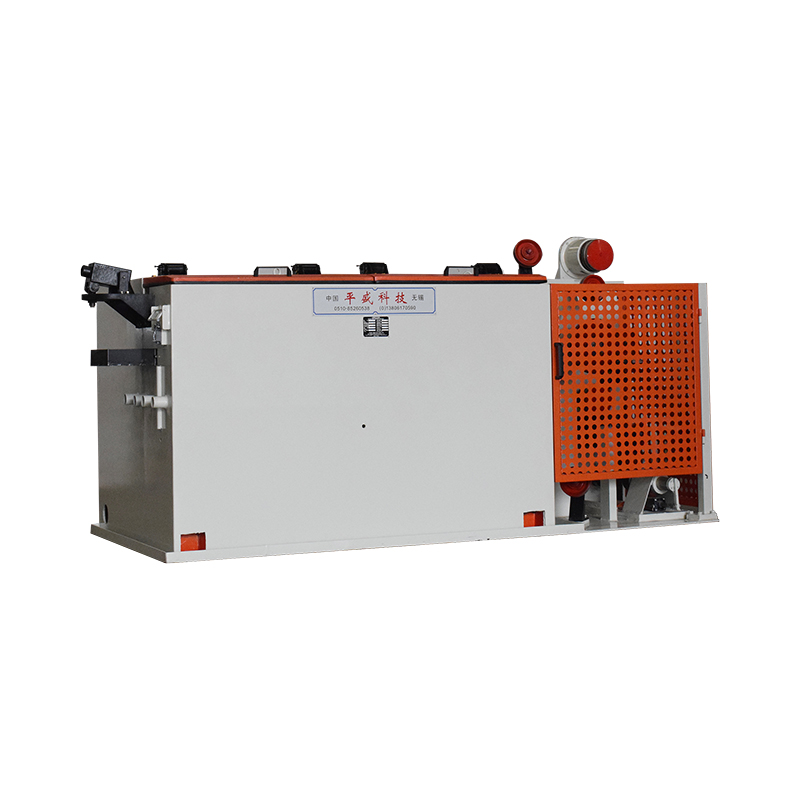
Capstan surface material and geometry also matter. Capstans coated with tungsten carbide or specialized ceramic compounds resist grooving from repeated wire contact far longer than bare steel capstans, reducing the frequency of capstan replacement — a procedure that requires machine downtime and sometimes partial disassembly.
Wire Break Detection and Automatic Stopping Systems
In a machine running wire at 1,000 m/min or faster, a wire break that is not detected within milliseconds can result in wire wrapping around capstans, flooding the machine with loose wire, and potentially damaging dies and capstans simultaneously. Effective wire break detection is therefore not a luxury feature — it is a safety and economic necessity that serious buyers investigate carefully.
High-quality wet drawing machines incorporate multiple detection methods working in parallel:
- Dancer roll or tension arm sensors that detect sudden loss of wire tension between blocks
- Optical or proximity sensors positioned at critical points along the wire path
- Current monitoring on individual drive motors, which spikes or drops abnormally when wire breaks or jams
- Acoustic sensors on advanced machines that detect the characteristic sound signature of wire fracture
The stopping time after break detection — measured from signal trigger to full machine stop — should be under 100 milliseconds for machines operating at high speeds. Buyers often request documentation of stopping response times as part of the technical evaluation process.
Key Specifications Buyers Compare Side by Side
| Specification | Typical Range | Buyer Priority Level |
| Max drawing speed (final block) | 400 – 2,500+ m/min | High |
| Number of dies / drawing stages | 12 – 25 stages | High |
| Inlet / outlet wire diameter | Inlet 1.0–3.0 mm / Outlet 0.05–0.5 mm | Critical |
| Emulsion tank capacity | 200 – 1,000+ liters | Medium |
| Drive system type | AC servo / vector-controlled individual drives | High |
| Wire break stopping time | <100 ms | High |
| Compatible die types | Tungsten carbide, PCD | Medium–High |
Maintenance Accessibility and Spare Parts Availability
Even the most capable machine loses its value quickly if it is difficult to maintain or if spare parts take weeks to arrive. Buyers — especially those operating in regions distant from major equipment manufacturers — consistently raise parts availability as a top concern. Questions about the local availability of bearings, seals, drive components, and control system boards are standard in procurement due diligence.
Machine layout also affects maintenance efficiency. Buyers favor designs where capstan blocks can be accessed from the front without requiring removal of adjacent components, where the emulsion system's filter housings and pump seals are easily reached without disassembly, and where the control cabinet is positioned to allow safe electrical servicing while the rest of the machine runs. These details seem minor during a factory demonstration but become significant after six months of daily production.
After-sales support — including commissioning assistance, operator training, and remote diagnostics — is weighted heavily by first-time buyers and by operations that lack experienced maintenance engineers on staff. Machines from suppliers with proven service infrastructure in the buyer's region command a premium that most experienced buyers consider justified.
Energy Efficiency and Total Cost of Ownership
As energy costs have risen globally, buyers have become increasingly attentive to the power consumption profile of wet wire drawing machines. A machine running 24 hours a day, 300 days a year represents a substantial electricity cost regardless of draw speed. Buyers now regularly request energy consumption data at various production speeds, and energy-efficient drive systems — particularly those with regenerative braking that recovers energy during deceleration — are viewed favorably even at a higher upfront cost.
Total cost of ownership calculations typically include initial purchase price, installation and commissioning costs, annual emulsion consumption, die replacement frequency and cost, maintenance labor, spare parts budget, and energy consumption. A machine that costs 15% more to purchase but delivers 20% lower die consumption and 10% lower energy use over a five-year operating horizon often delivers better financial returns than the lower-priced alternative. Buyers who run these calculations in advance are consistently better positioned to justify investment decisions to management and to avoid regret purchases.