
 EN
EN
 English
 Español
 Français
 Português
 عربى
عربى
Why Is the Inverted Vertical Wire Drawing Machine the Preferred Choice for Fine and Ultra-Fine Wire Production?
Content
- 1 What Is an Inverted Vertical Wire Drawing Machine?
- 2 Core Working Principle of the Inverted Vertical Design
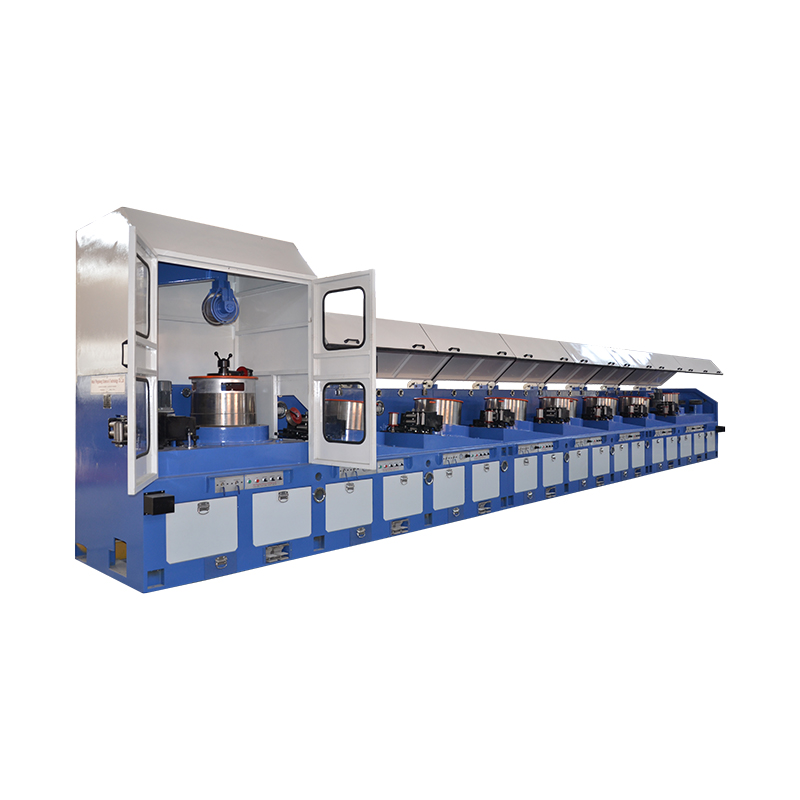
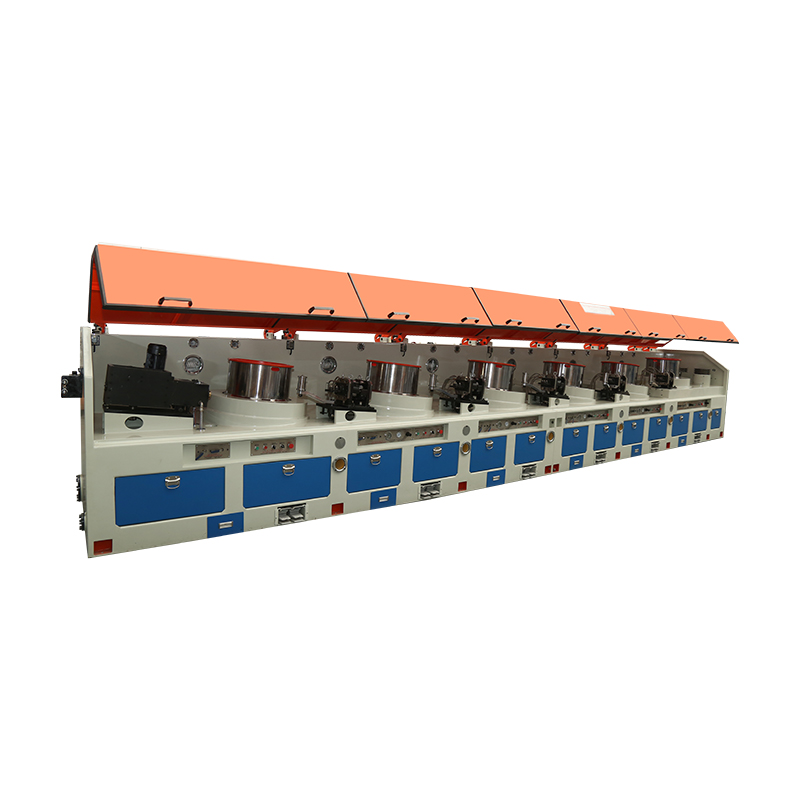
- 3 Key Components and Their Functions
- 4 Inverted Vertical vs. Other Wire Drawing Machine Configurations
- 5 Number of Drawing Stages and Reduction Ratios
- 6 Materials Processed on Inverted Vertical Drawing Machines
- 7 Critical Factors When Evaluating and Purchasing an Inverted Vertical Wire Drawing Machine
What Is an Inverted Vertical Wire Drawing Machine?
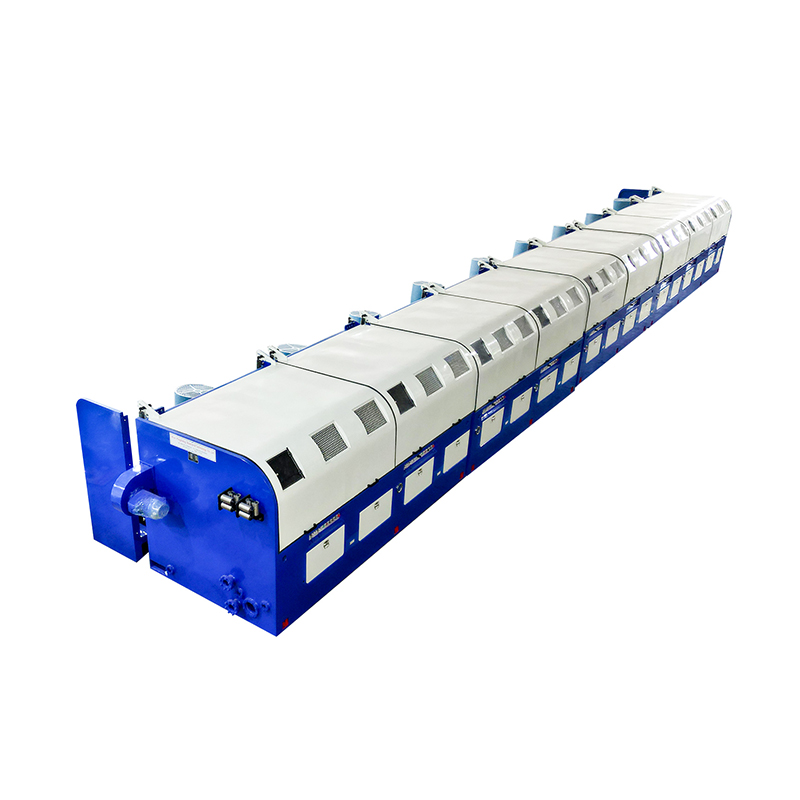
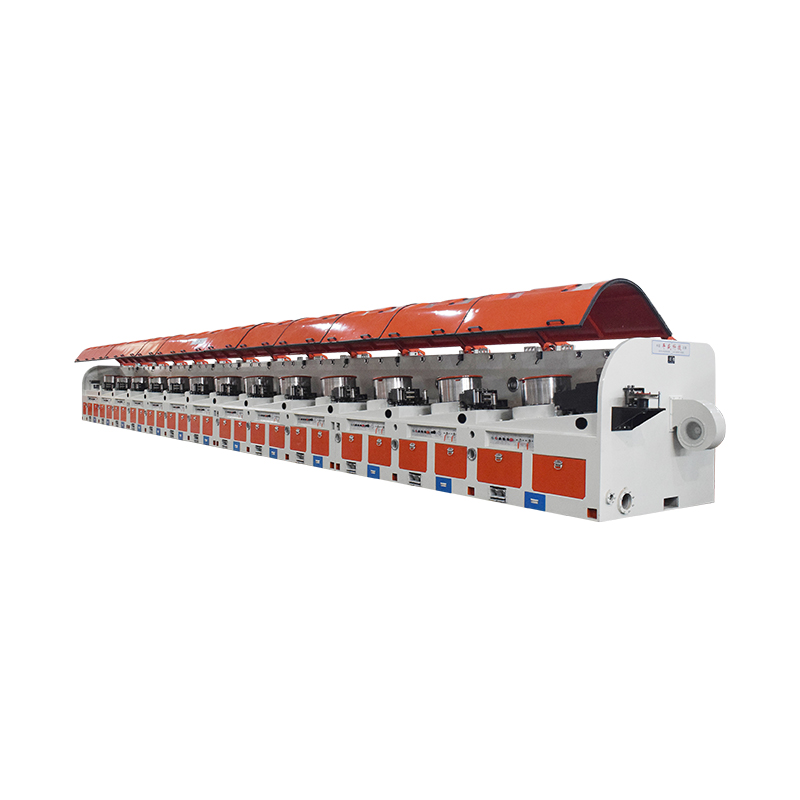
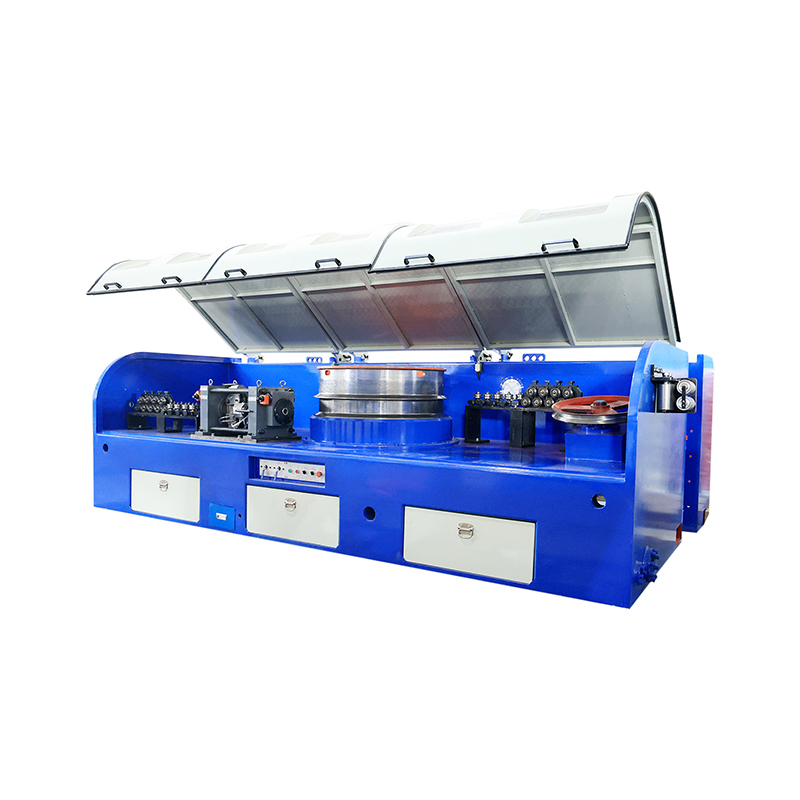
An inverted vertical wire drawing machine is a specialized metal wire processing machine in which the drawing capstans — the rotating drums that pull wire through progressively smaller dies — are oriented vertically with the wire coiling upward from the capstan rather than downward. The term "inverted" refers to this reversed coiling direction: unlike a standard vertical drawing machine where the wire wraps downward around a capstan and accumulates at the bottom, the inverted design allows the wire to rise upward and collect into a coil above or around the capstan. This seemingly simple geometric distinction has profound implications for wire tension control, surface quality, and the machine's suitability for drawing fine and ultra-fine wire diameters.
Inverted vertical wire drawing machines are predominantly used in the production of fine copper wire, aluminum wire, and precious metal wire for applications including magnet wire (enameled wire for motor windings and transformers), electronic component leads, telecommunications wire, and medical device conductors. Their ability to handle very fine wire — often below 0.5mm and in some configurations down to 0.02mm or finer — without introducing surface damage or excessive tension variations makes them indispensable in precision wire manufacturing operations.
Core Working Principle of the Inverted Vertical Design
In a conventional horizontal wire drawing machine, wire is pulled through a series of dies arranged horizontally, with each capstan accumulating a set number of wraps before passing the wire to the next die stage. In a standard vertical machine, wire falls under gravity as it accumulates. The inverted vertical configuration addresses the specific problems of fine wire production by exploiting gravity and wire stiffness in a controlled manner that reduces the risk of wire tangling, kinking, or uneven tension buildup.
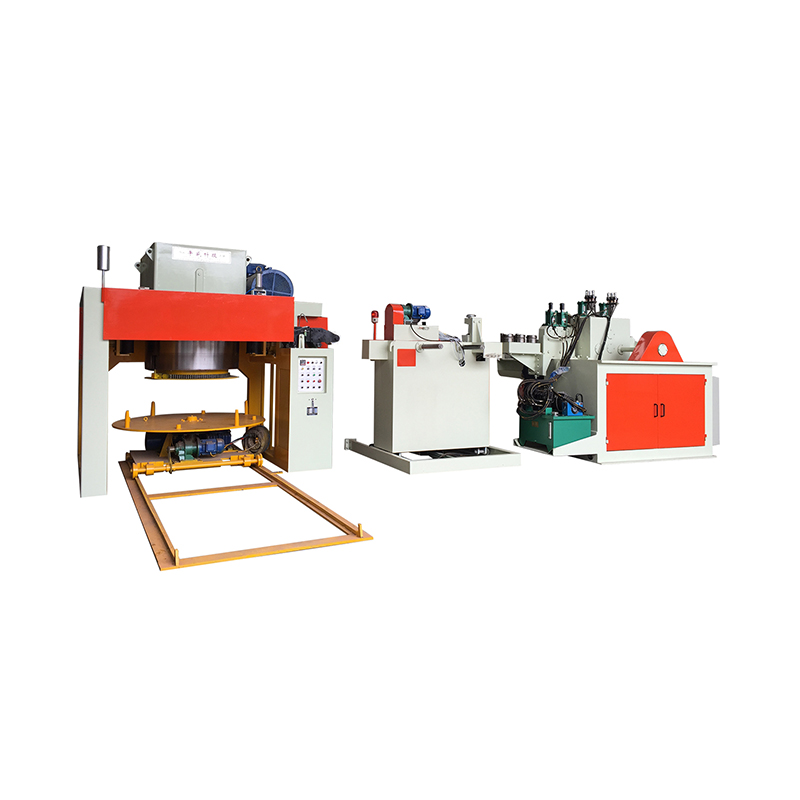
In the inverted design, wire enters each capstan from below, wraps around the drum multiple times, and exits upward toward the next die. The wire coil sits on top of the capstan, where gravity assists in keeping the coil compact and orderly without external guides pressing against the delicate wire surface. Between each capstan and the next die, the wire passes through a lubrication system and enters the die from below, maintaining a consistent approach angle that contributes to dimensional uniformity of the drawn wire. The overall wire path from pay-off spool through multiple reduction stages to the final take-up coiler follows a smooth vertical progression that minimizes directional changes and their associated tension spikes.
Key Components and Their Functions
Understanding the major mechanical and electrical components of an inverted vertical wire drawing machine helps in evaluating equipment quality, diagnosing performance issues, and specifying the right machine configuration for a given wire product.
- Pay-off Stand: The entry point of the machine, where the input wire rod or coil is mounted on a rotating cradle or spool holder. Active pay-off systems with tension-controlled braking are used in fine wire applications to ensure the wire enters the first die under consistent, low tension without snarling or jerking.
- Drawing Dies: Tungsten carbide or diamond dies through which the wire is pulled to reduce its diameter at each stage. Die geometry — specifically the approach angle, bearing length, and back relief — is carefully engineered for each wire material and reduction ratio. Diamond dies are standard for ultra-fine wire below 0.1mm due to their superior surface finish and wear resistance.
- Capstans (Drawing Blocks): The vertically oriented rotating drums that pull the wire through each die and accumulate the inter-stage wire wraps. Capstan surface material and finish are critical — typically hardened steel with a chrome or tungsten carbide coating — to minimize wire surface abrasion and provide consistent friction for wire gripping without slippage.
- Lubrication System: Wet drawing with liquid lubricant (emulsion or soap solution) or dry drawing with powder lubricant is applied at each die entry point. In fine wire drawing, effective lubrication is critical to reduce die wear, prevent wire surface scoring, and control the heat generated by plastic deformation during each reduction pass.
- Drive System: Each capstan is driven by an individual motor or by a shared line shaft with adjustable speed ratios. Modern machines use individual AC servo drives or DC motors with closed-loop speed control for each capstan, allowing precise synchronization to maintain consistent inter-stage wire tension regardless of drawing speed variations.
- Annealer (Inline or Offline): Many inverted vertical drawing lines incorporate an inline continuous annealer — typically a resistive or induction heating unit — between the final drawing stage and the take-up coiler. Annealing restores the ductility and conductivity of the work-hardened wire, which is essential for copper magnet wire and electronic wiring applications requiring specific elongation and resistivity properties.
- Take-up Coiler: The finished wire is wound onto spools, bobbins, or coil formers at the machine exit. Precision traversing mechanisms ensure even layer-by-layer winding without wire overlap or gaps, which is critical for downstream enameling, stranding, or direct use on winding machines.
Inverted Vertical vs. Other Wire Drawing Machine Configurations
Selecting the appropriate wire drawing machine configuration requires understanding the comparative advantages and limitations of each design relative to the wire material, target diameter, production volume, and quality requirements.
| Machine Type | Wire Diameter Range | Key Advantage | Primary Application |
| Inverted Vertical | 0.02mm – 0.8mm | Excellent tension control, minimal surface damage | Fine/ultra-fine copper, magnet wire |
| Standard Vertical | 0.5mm – 3mm | Simple coil accumulation, low floor space | Medium fine copper and aluminum |
| Horizontal Bull Block | 1mm – 8mm | High capacity, robust construction | Steel wire, heavy copper rod breakdown |
| Continuous Multi-Die Horizontal | 0.3mm – 5mm | High speed, continuous operation | Mass production copper and aluminum |
| Micro Wire Drawing | 0.005mm – 0.05mm | Ultra-precise tension and die control | Medical wire, precious metals, sensors |
The inverted vertical configuration's most significant competitive advantage over horizontal machines in fine wire production is its superior management of wire tension between drawing stages. Horizontal machines rely on dancer rollers and accumulator mechanisms to buffer inter-stage tension variations, which introduce additional contact points that can damage fine wire surfaces. The inverted vertical design's use of gravity and the orderly coil-on-capstan accumulation naturally absorbs minor speed variations between stages with fewer mechanical interventions.
Number of Drawing Stages and Reduction Ratios
The total reduction in wire diameter from input to output is achieved by passing the wire through multiple dies in sequence, with each die reducing the cross-sectional area by a controlled percentage known as the reduction ratio per pass. The cumulative area reduction from input rod to final fine wire can be enormous — reducing 8mm copper rod to 0.1mm wire represents a cross-sectional area reduction of over 99.98%.
Inverted vertical machines are typically configured with 12 to 24 drawing stages for fine wire production, though some ultra-fine wire lines for magnet wire or electronic component wire production may incorporate 30 or more stages. Each stage typically achieves an area reduction of 15% to 25% per pass for copper, with the specific reduction sequence optimized to balance work hardening, die wear, and lubrication effectiveness across all stages. Intermediate annealing — inserting an in-process heat treatment step partway through the drawing sequence — may be employed for materials with limited cold-working capacity or when the target final properties cannot be achieved by cold drawing alone from the starting material condition.
Materials Processed on Inverted Vertical Drawing Machines
While copper is by far the most commonly processed material on inverted vertical wire drawing machines, the design's precision tension control and gentle wire handling make it suitable for a range of other materials with specific processing challenges.
- Oxygen-Free Copper (OFC) and ETP Copper: The primary application. High-conductivity copper wire for magnet wire, enameling, and electronic wiring is drawn to finished diameters from 0.02mm to 0.8mm on inverted vertical machines, often with inline annealing to achieve the specified tensile strength, elongation, and resistivity values required by IEC or NEMA standards.
- Aluminum and Aluminum Alloys: Aluminum's lower tensile strength and tendency to work-harden rapidly make tension control especially important. Inverted vertical machines are used to draw aluminum wire for magnet wire applications and fine electrical conductors, with careful die angle and lubrication optimization to prevent surface cracking.
- Silver and Gold: Precious metal wire for jewelry, electrical contacts, thermocouple wire, and medical applications is processed on inverted vertical machines where the high material value demands zero surface defects and minimal scrap loss from wire breakage.
- Nickel and Nickel Alloys: Resistance wire, thermocouple wire, and high-temperature electrical conductors made from nickel, Nichrome, and nickel-chromium alloys require careful processing due to their high work-hardening rate and abrasive characteristics that cause accelerated die wear.
- Copper-Clad Aluminum (CCA): Bimetallic wire with an aluminum core and copper cladding requires precise tension control to prevent separation of the cladding layer during drawing — a challenge well-suited to the inverted vertical machine's controlled inter-stage tension management.
Critical Factors When Evaluating and Purchasing an Inverted Vertical Wire Drawing Machine
Purchasing an inverted vertical wire drawing machine is a significant capital investment that requires careful technical and commercial evaluation. The following factors should be assessed thoroughly before committing to a supplier or specification.
Maximum Drawing Speed and Production Capacity
Drawing speed at the final capstan — expressed in meters per minute — determines the machine's production output for a given wire diameter. Fine wire machines typically operate at final speeds of 600 to 2500 m/min for copper wire in the 0.1mm to 0.5mm range, with ultra-fine wire machines for diameters below 0.05mm operating at lower speeds to maintain wire integrity. Ensure that the quoted drawing speed is achievable continuously, not just under ideal short-run test conditions, and that the drive system and cooling provisions support sustained operation at maximum speed.
Control System and Automation Level
Modern inverted vertical drawing machines are equipped with PLC-based control systems managing individual capstan speed, tension feedback, lubrication flow, annealer temperature, and take-up traversing in an integrated manner. Evaluate the control system's responsiveness to tension deviations, the granularity of speed adjustment per capstan, data logging capabilities for process traceability, and the availability of remote diagnostics and software update support from the manufacturer.
Die Holder Design and Changeover Time
Die changes are a routine maintenance activity in wire drawing, and the ease and speed of die replacement directly affects machine utilization. Quick-release die holders that allow individual die changes without dismounting adjacent components reduce downtime significantly in high-production environments. Evaluate the die holder design for accessibility, alignment repeatability after die change, and compatibility with the range of die sizes required for your product mix.
After-Sales Support and Spare Parts Availability
Given that an inverted vertical wire drawing machine is a production-critical asset, after-sales support quality — including technical service response time, availability of critical spare parts, and provision of operator training — must be evaluated as carefully as the machine's technical specifications. Request references from existing customers operating the same machine model in similar production environments, and confirm the supplier's local or regional service infrastructure before finalizing the purchase decision.