
 EN
 English
 Español
 Français
 Português
 عربى

What Should Wire Producers Know About OTO Pulley Type Wire Drawing Machines?
Content
- 1 What the OTO Pulley Type Design Actually Does
- 2 Inside the Machine: What Each Part Is Doing
- 3 Where a Pulley-Type Machine Earns Its Place
- 4 Comparing the Main Drawing Machine Families
- 5 Choosing the Right Configuration: Questions Worth Asking
- 6 Building a Complete Line Around the Machine
- 7 Daily Care That Keeps Output Steady
- 8 Why Buying From the Factory Changes the Conversation
- 9 Tell Us What You Are Drawing
If you have spent any real time comparing wire drawing equipment, you have probably noticed how often the OTO pulley type shows up in supplier catalogues and in conversations between plant engineers. It is one of those machine families that keeps coming back because it solves a very specific set of problems really well. We have been building drawing machines in Wuxi since 1985, and the pulley-type conversation is one we have hundreds of times a year with customers who are either setting up a new line or replacing an older block.
What follows is not a sales pitch. It is the same plain explanation we give on the phone: how the machine works, where it earns its place on a shop floor, what to compare it against, and which details are worth getting right before you sign anything.
What the OTO Pulley Type Design Actually Does
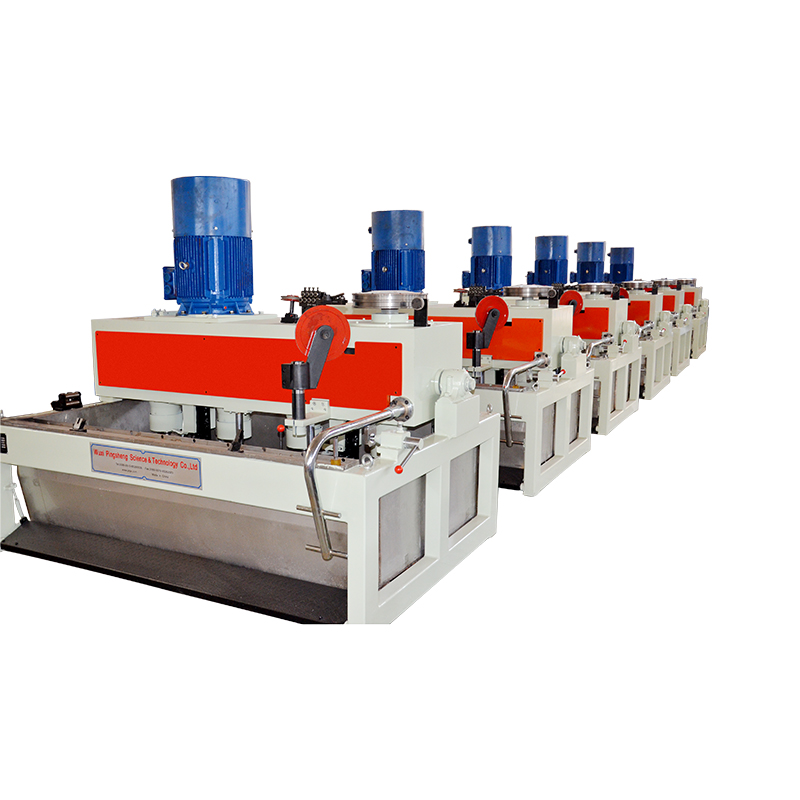
The name can be confusing at first. In the wire trade, "OTO" is the label commonly attached to the pulley, or slip, family of drawing machines. The working principle is straightforward: wire is pulled through a die, then wraps around a driven capstan, then enters the next die, and so on through a series of passes until it reaches the finished diameter.
The detail that defines this design is the word "slip". Each capstan surface runs slightly faster than the wire travelling over it. That speed difference, fixed at the design stage, lets the wire slip across the drum instead of being locked to it. In practice this gives the machine a useful amount of tolerance, because a small change in die wear or incoming wire diameter does not immediately translate into a broken wire or a stalled pass.
Pulley-type machines also handle accumulation well. Wire can build up slightly between passes, which smooths out the small interruptions that happen in any real production day, such as a spool change downstream or a brief tension spike. For medium to fine wire running in long, continuous campaigns, that behaviour is often worth more than a headline speed figure.
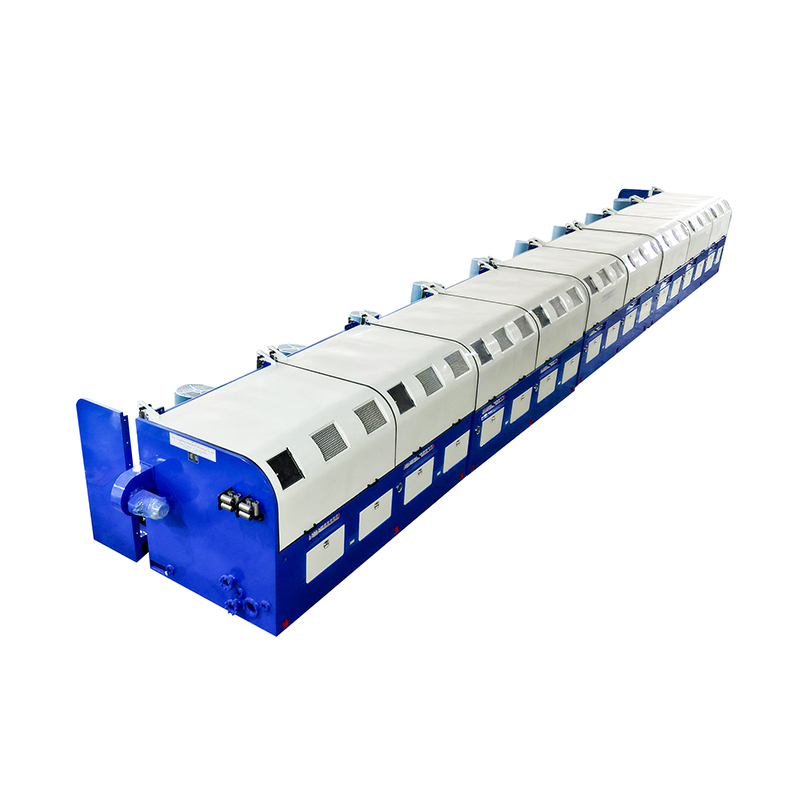
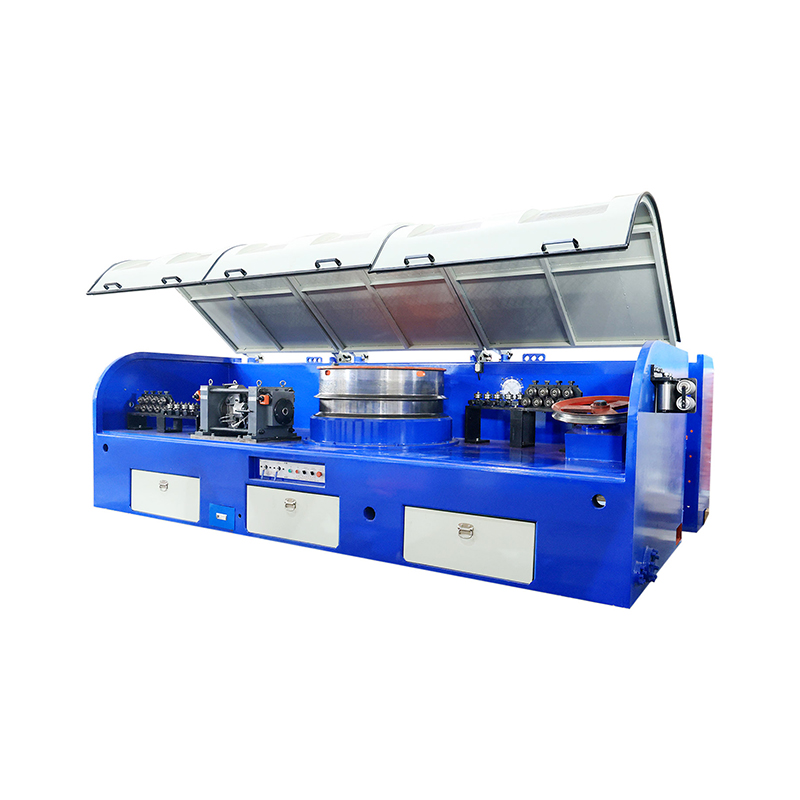
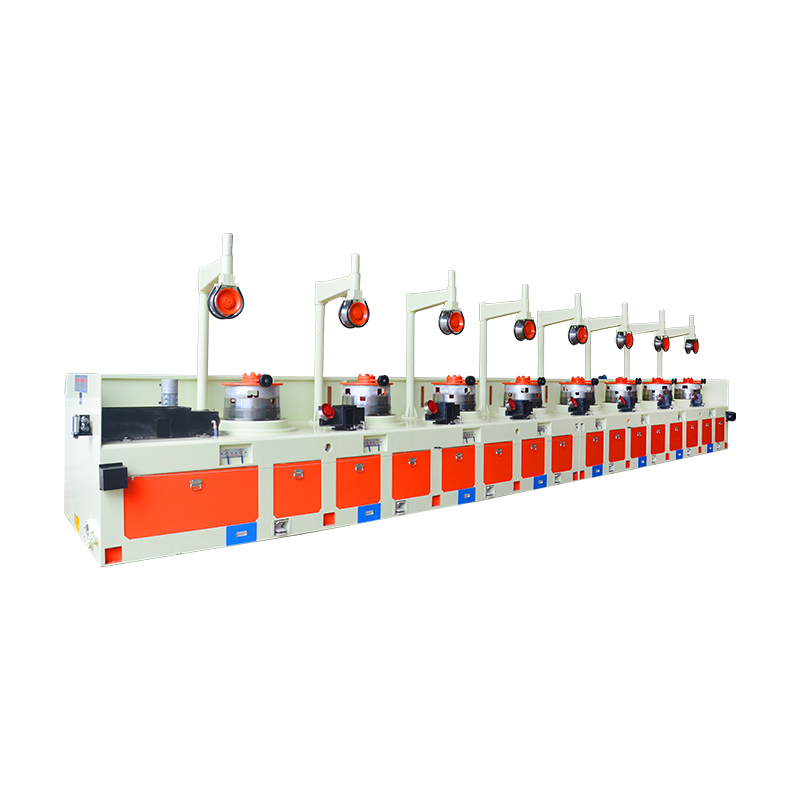 OTO Pulley-Type Wire Drawing MachinePulley-type drawing machine that allows wire accumulation between passes, suited to long continuous campaigns with medium to fine wire.View Product →
Inside the Machine: What Each Part Is Doing
It helps to walk the wire path from start to finish, because almost every quality complaint we hear traces back to one link in that chain rather than to the machine as a whole.
- Payoff: feeds wire in at controlled tension. A jerky payoff shows up later as diameter variation, no matter how good the drawing section is.
- Die holders and dies: set the reduction per pass. Carbide dies cover most production work; harder materials are reserved for finer or more demanding specifications.
- Capstans and pulleys: pull the wire and define the slip ratio. Surface finish and coating on the drum have a direct effect on wire surface quality and drum life.
- Cooling and lubrication: carry away the heat generated by deformation and keep friction predictable. Emulsion concentration and temperature are worth monitoring daily, not monthly.
- Tension and dancer control: keep the wire stable between passes and before the take-up.
- Take-up: spools the finished wire with even traverse and consistent tension.
We wrote a more detailed breakdown of how the structural parts of a drawing machine interact, which is a useful companion read if you are troubleshooting a specific pass: the characteristics of each part in the structural device of the wire drawing machine.
Where a Pulley-Type Machine Earns Its Place
Pulley-type drawing tends to suit producers who run a varied product mix on medium and fine wire and who value steady, repeatable output over the absolute maximum reduction in a single pass. Typical settings include wire for fasteners, mesh, welding consumables, rope and strand, and a range of copper and aluminium products.
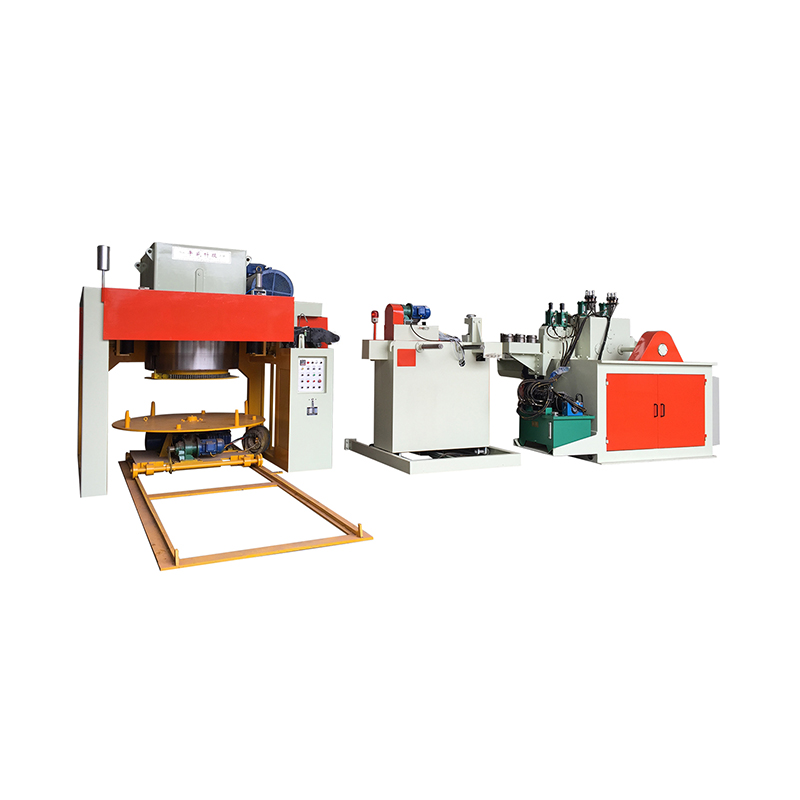
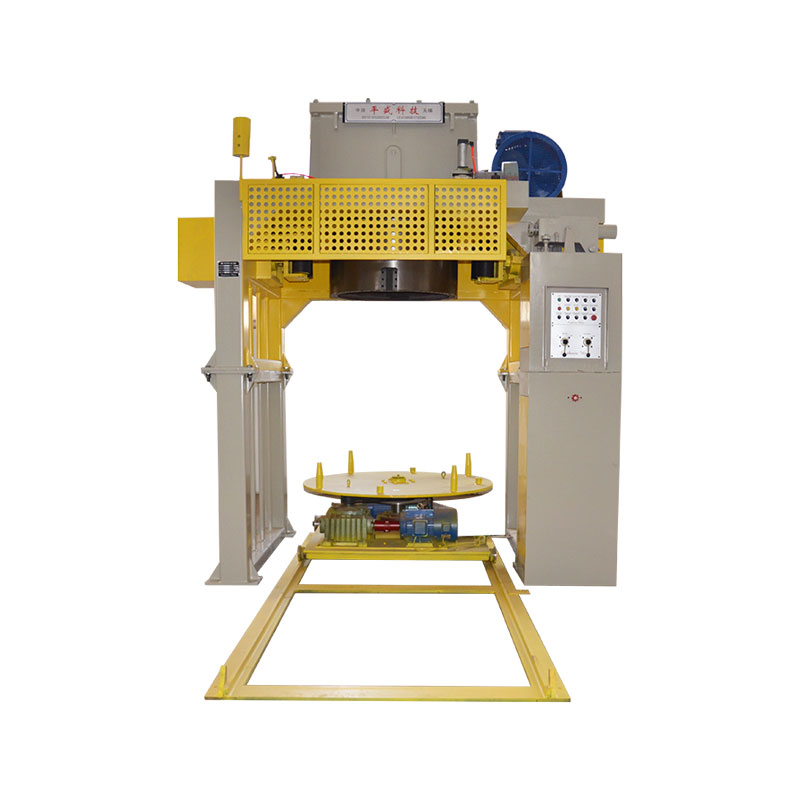
It is less suitable when you need very heavy reductions from large starting coils, or when the wire is stiff enough that wrapping it around a comparatively small drum becomes awkward. Those jobs usually belong to an inverted vertical wire drawing machine or to a multi-block straight-line configuration, where the wire travels in a straighter path and the coil handling is built for weight.
The honest answer, in most cases, is that the right machine depends on the material, the starting diameter, the finished tolerance and how many changeovers your schedule demands. A factory that only offers one design will always find a reason to recommend it.
Comparing the Main Drawing Machine Families
The table below is the rough map we use in early discussions. It is deliberately qualitative, because two producers with the same wire diameter can still need different machines once shift patterns and product mix are taken into account.
| Machine family | How the wire moves | Where it usually fits | Points to watch |
|---|---|---|---|
| OTO pulley type | Wraps successive driven capstans with controlled slip | Medium to fine wire, varied product mix, long runs | Slip ratio and drum surface condition |
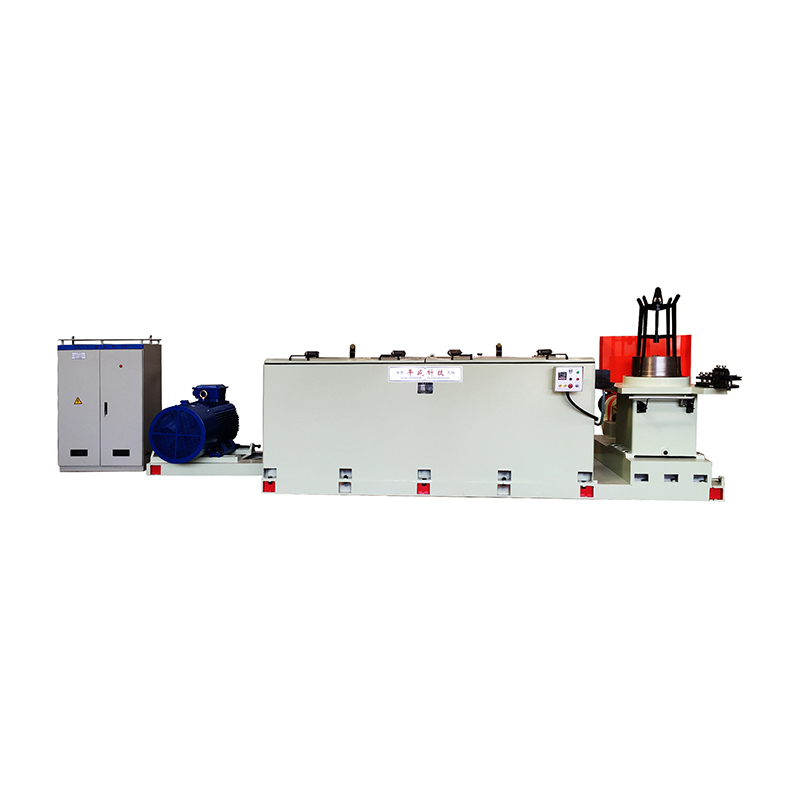
| Straight line multi-block | Passes through blocks with minimal accumulation | Higher speeds and consistent single-product campaigns | Die schedule and inter-block tension balance |
| Wet type | Draws submerged or heavily flooded for cooling | Fine wire where surface quality and heat control dominate | Emulsion chemistry, filtration and temperature |
| Inverted vertical | Coil sits below, wire drawn vertically | Heavier coils and larger starting diameters | Coil handling, floor space and loading access |
Choosing the Right Configuration: Questions Worth Asking
When a customer sends an inquiry that simply says "quote for a drawing machine", we usually send a short list of questions back. The answers change the configuration substantially, and getting them right at the start saves weeks later.
- What material are you drawing, and what is the incoming wire condition?
- What are the starting and finished diameters, and what tolerance must the finished wire hold?
- How many passes do you expect, and how much reduction per pass is acceptable in your process?
- What spool or coil size must the take-up handle, and how often will operators change it?
- What line speed do you actually need across a full shift, not just at peak?
- What is your plant power supply, and how much automation do you want in the control system?
Our drawing machines are built with electronic control configurations and make wide use of CNC and intelligent methods, which is a real advantage when you want repeatable settings across shifts and operators. But it is worth being clear about what you want the controls to do, rather than buying capability you will never switch on.
Building a Complete Line Around the Machine
A drawing machine never works alone, and the equipment on either side of it often decides whether the line runs smoothly. We build payoff and take-up units alongside the drawing machines specifically so that tension, traverse and spool handling are designed as one system rather than three separate purchases.
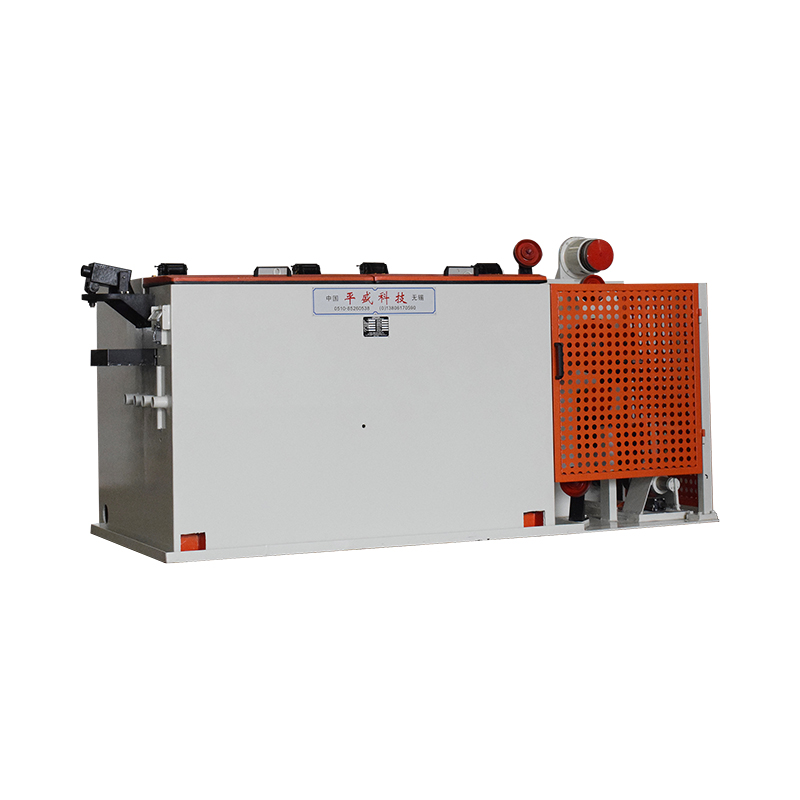
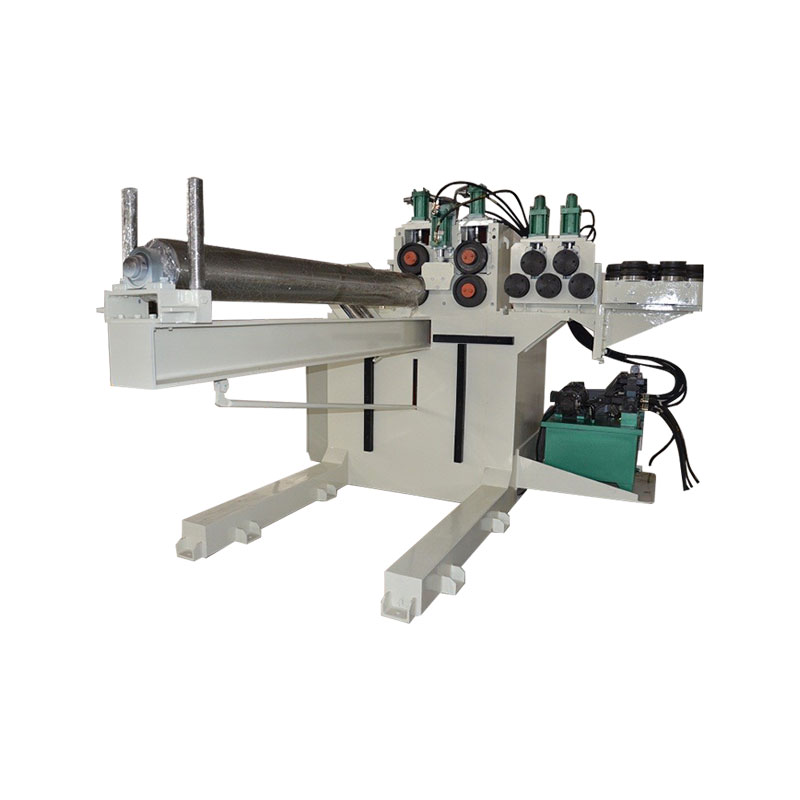 Pay-Off Machines for Wire Drawing LinesCategory of pay-off units that unwind spools or coils and help stabilize inlet tension before wire enters the drawing line.View Product →
On the inlet side, a stable payoff reduces tension spikes before they ever reach the first die. On the outlet side, even traverse and consistent tension determine how the finished spool behaves on your customer's machine.
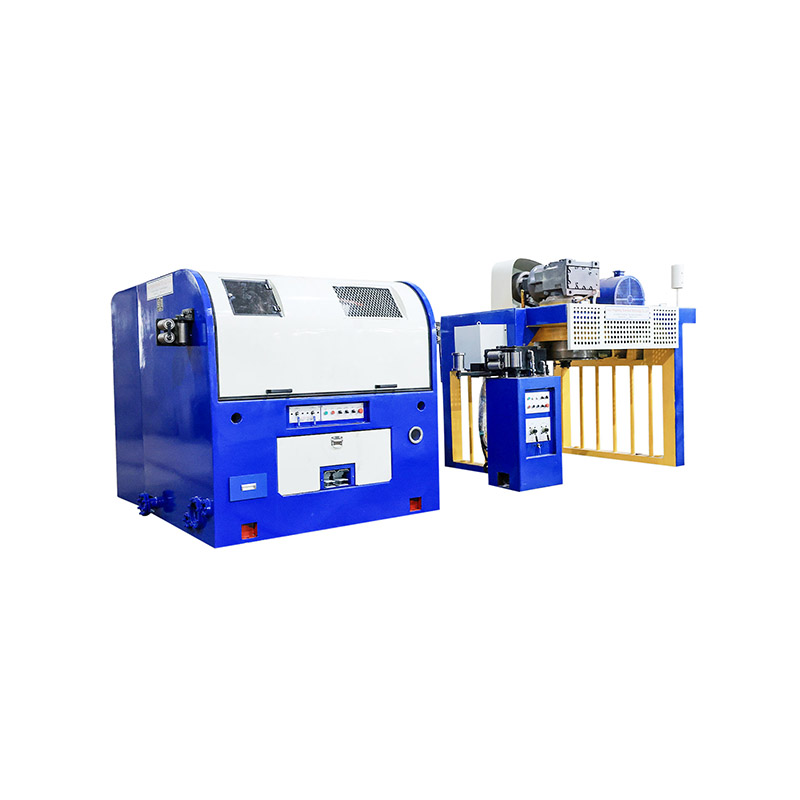
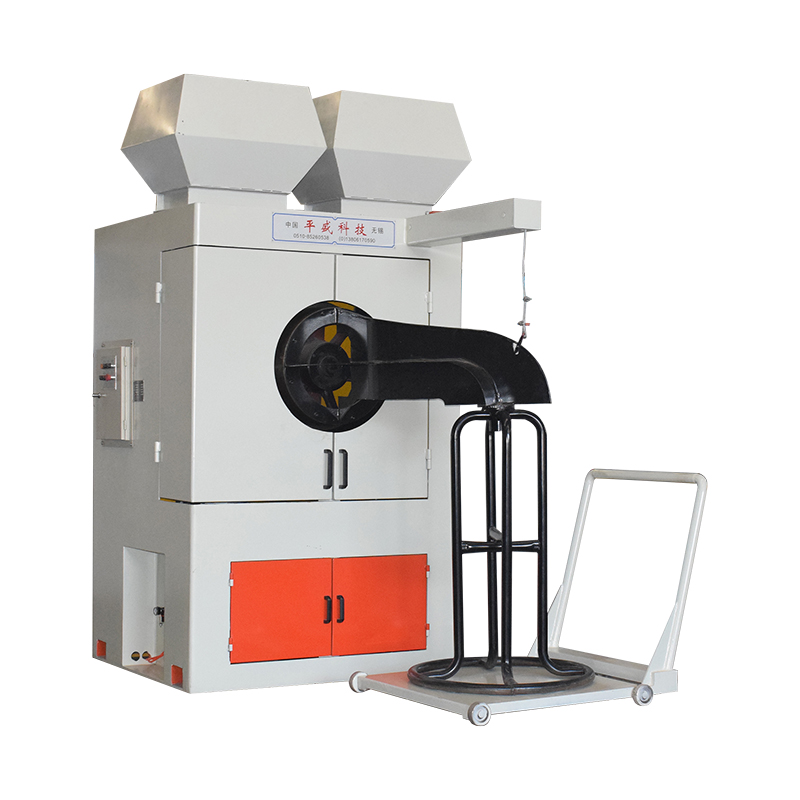 Take-Up Machines for Wire Drawing and CoilingCategory of take-up and coiling units with adjustable winding speed and tension to support consistent spool behavior at the line outlet.View Product →
Surface treatment equipment completes the picture for lines that need cleaning or coating before or after drawing. If you are upgrading an existing line rather than building a new one, it is often the front and back ends that deliver the fastest improvement per unit of investment.
Daily Care That Keeps Output Steady
Most of the pulley-type machines we service around the world fail slowly rather than suddenly, and the warning signs are usually visible long before a stoppage. A few habits make a real difference:
- Check drum surfaces for scoring and wire build-up at every die change.
- Track die wear by pass rather than by calendar; one worn die ruins the schedule for the rest of the line.
- Test emulsion concentration and temperature on a fixed routine, and record the results.
- Keep the wire path aligned; a small guide misalignment becomes a surface defect within a shift.
- Never bypass guards or interlocks to save a few minutes. Safety devices exist because drawing lines are unforgiving.
Operators who understand why the slip ratio matters tend to take better care of the machine than operators who were only taught which button to press. That is why we include hands-on commissioning and training wherever the project allows it.
Why Buying From the Factory Changes the Conversation
Since 1985 we have built straight-line, wet, inverted vertical, combined and pulley-type drawing machines, plus the auxiliary equipment around them, for metal products manufacturers in China and overseas. That history matters less as a slogan and more as a practical thing: when something needs adjusting on a line, the people who designed and assembled it are the same people you speak to.
We hold ISO9001 quality management system certification and a number of patents and independent intellectual property rights, and we continue to invest in research and development. We would rather be judged on how a machine performs in year five than on how it looks in a brochure. Our own slogan, "Coming From China, Marketing To The World," is a fair summary of how we work: build locally, support globally, and stay reachable after the invoice is paid.
Tell Us What You Are Drawing
If you are evaluating an OTO pulley type wire drawing machine, the most useful first step is a short description of your process: material, starting diameter, finished diameter, tolerance, spool size, required output and available floor space. Send that over and we will tell you honestly whether a pulley-type machine is the right fit, or whether a straight-line, wet or inverted vertical design would serve you better.
There is no obligation and no pressure. Most of the time the answer is straightforward, and when it is not, we would rather work it out with you before any machine is built.