
 EN
EN
 English
 Español
 Français
 Português
 عربى
عربى
Inverted Vertical Wire Drawing Machine Factory: Selection and Integration Guide
Content
- 1 Why the Inverted Vertical Layout Earns Its Place on a Line
- 2 Inside Our Inverted Vertical Range
- 3 When a Combined Configuration Earns Its Cost
- 4 High-Carbon and PC Wire: The Application We Name Explicitly
- 5 Completing the Line: Payoff, Take-Up and Surface Treatment
- 6 Controls, Automation and Safe Operation
- 7 Certificates, Claims and the Numbers We Can Prove
- 8 What to Send Us Before You Ask for a Quote
An inverted vertical wire drawing machine factory is judged by more than the machines parked in its assembly hall. For a wire producer, the real question is whether the builder can read a drawing schedule, match a block to a die, and keep a line running at the pace the order book demands. That is the standard we hold ourselves to at our works in Wuxi, China, where our story began in 1985 and where we have kept building and refining wire drawing equipment ever since.
We make straight line wire drawing machines, wet wire drawing machines, inverted vertical wire drawing machines, OTO pulley type machines, and the equipment that surrounds them: payoff machines, take-up machines, surface treatment equipment and other auxiliary machinery. Our customers are metal products manufacturers at home and abroad, and our English slogan says it plainly: Coming From China, Marketing To The World.
Why the Inverted Vertical Layout Earns Its Place on a Line
The first thing to understand about an inverted vertical machine is the word inverted. Instead of mounting the drawing block on a horizontal shaft, the block or spool hangs with its axis vertical, so the wire enters and leaves along a short, nearly straight path. On a crowded shop floor this changes several things at once.
The footprint comes down. A vertical block occupies floor space roughly the size of its own diameter, which leaves more room for the payoff stand, the intermediate equipment and the take-up station. In plants where every square metre has to earn its keep, that is a real gain rather than a brochure line.
Threading and inspection get easier. Because the block is open and the die holders sit within reach, stringing up a new wire size is a task one operator can handle without gymnastics. Coil handling also improves: finished coils come off vertically, which suits the lifting equipment many plants already use and removes the temptation to drag a coil sideways across the floor.
None of this makes the inverted vertical design the right answer for every wire. Very fine or low-tensile wire, or a product that needs a long immersion path, may still run better on a straight line or a wet machine. The layout has to follow the product, and that is a conversation we prefer to have before a quotation, not after.
Inside Our Inverted Vertical Range
Our inverted vertical wire drawing machine range is organised into three pages on this site: the base range, an ordinary inverted vertical machine, and a configuration that pairs a vertical block with a single drawing block. The names are not marketing decoration; each one tells you something about how the machine is built and where it belongs in a drawing sequence.
| Configuration | How it is described | Where it usually fits |
|---|---|---|
| Inverted vertical wire drawing machine (base range) | The standard vertical arrangement that anchors the family | A first machine, or an added unit where the line needs a compact vertical block |
| Ordinary inverted vertical wire drawing machine | A straightforward vertical build without extra drafting stages | Routine production where one vertical pass sequence is sufficient |
| Inverted vertical machine combined with single drawing block | A vertical block paired with a separate single drawing block | Lines that need one more draft stage or a different finishing pass without adding a whole machine |
Every one of these machines is designed to work with our payoff, take-up and surface treatment equipment rather than as a standalone island, and each can be supplied as part of a wider drawing line. If you want the full picture of the inverted vertical wire drawing machine range, that page collects the configurations in one place.
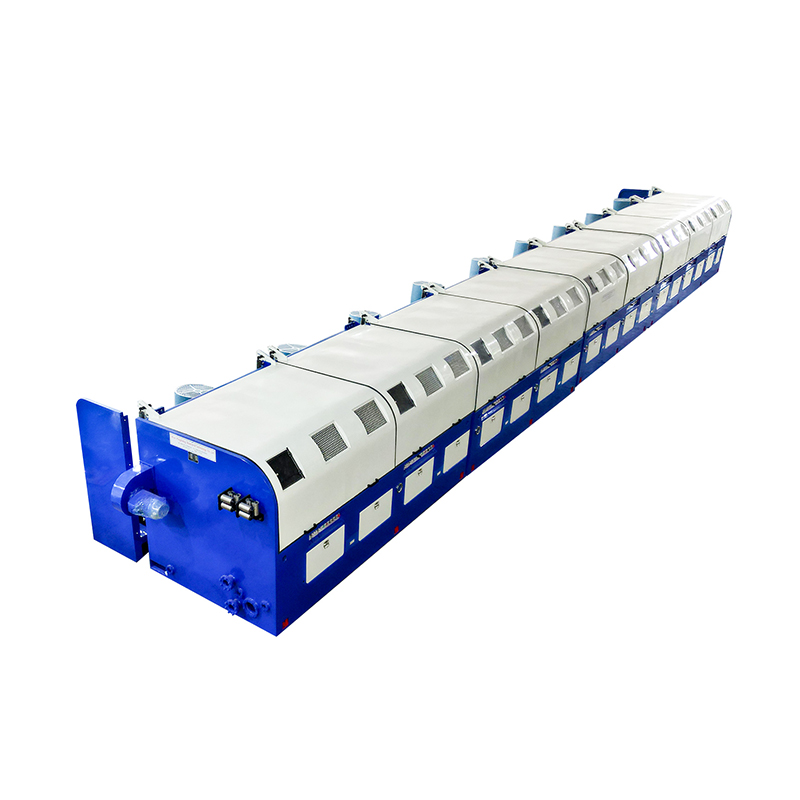
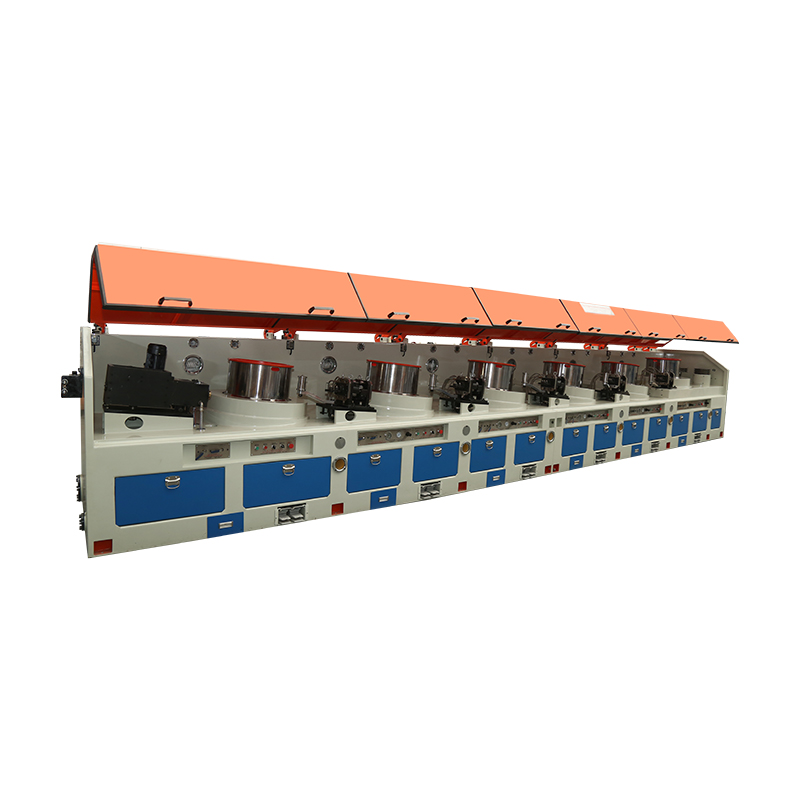
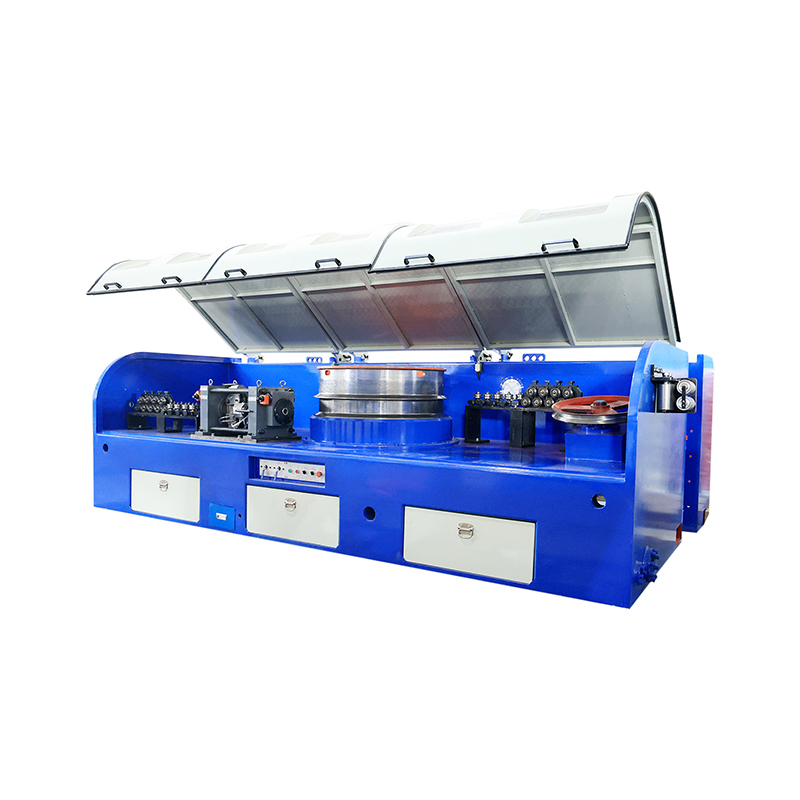
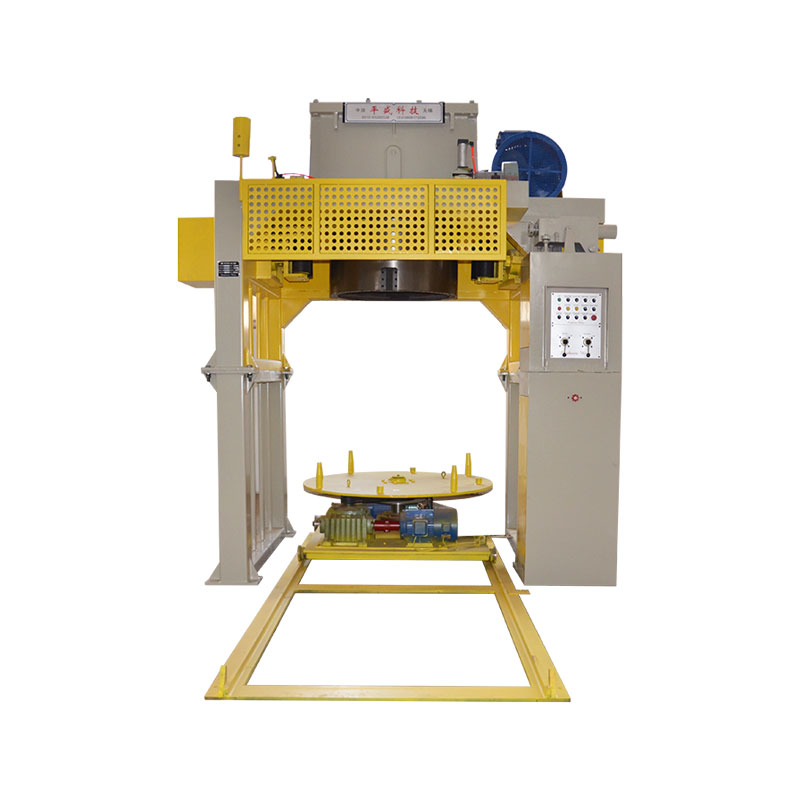
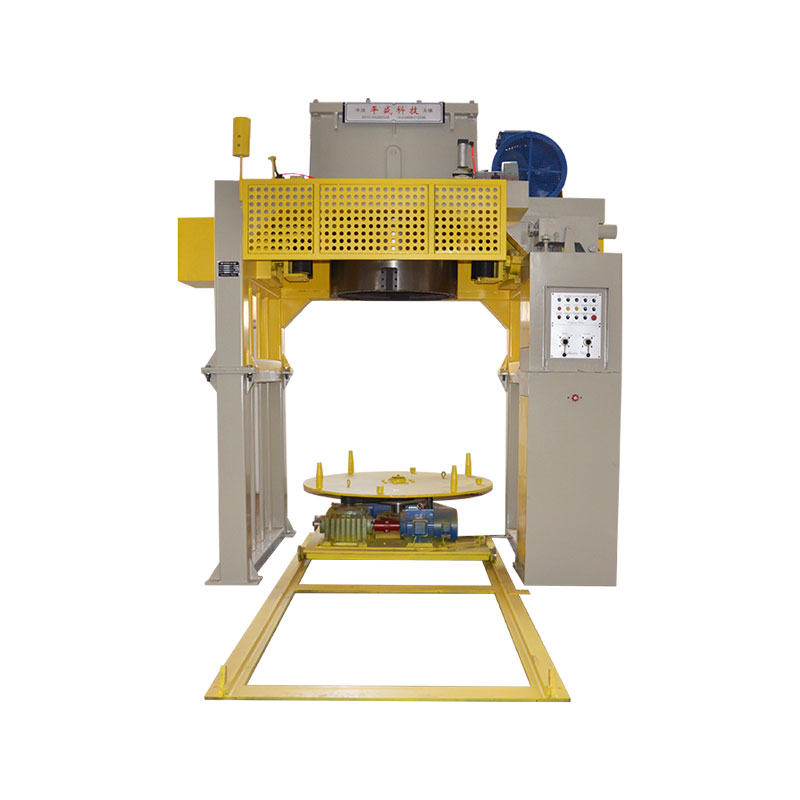 Ordinary inverted vertical wire drawing machineordinary inverted vertical wire drawing machine is a type of wire drawing machine that employs a vertical configuration for drawing wire, with the added benefit of a s...View Product →
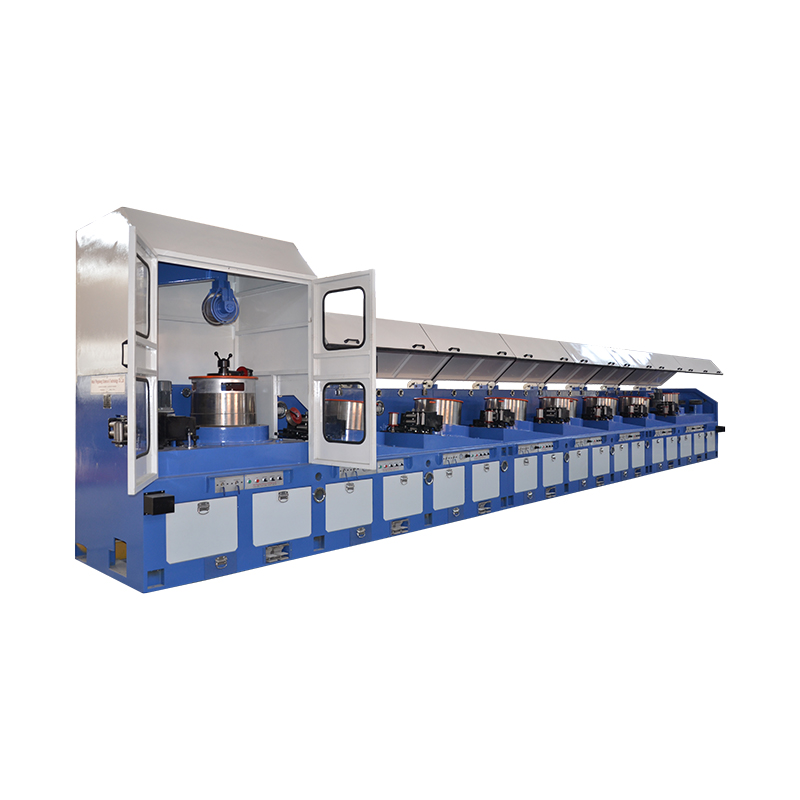
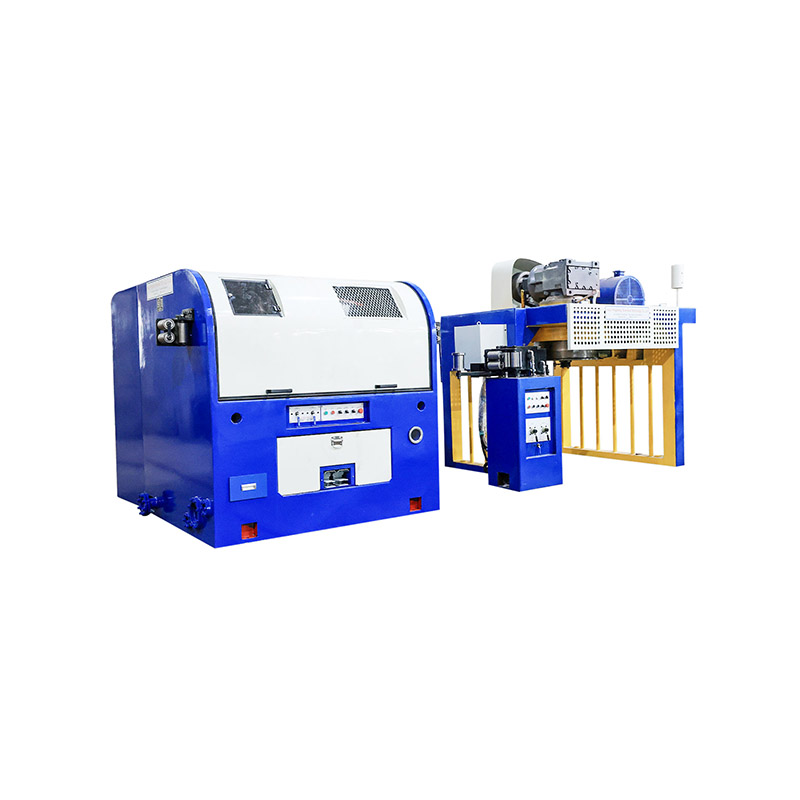
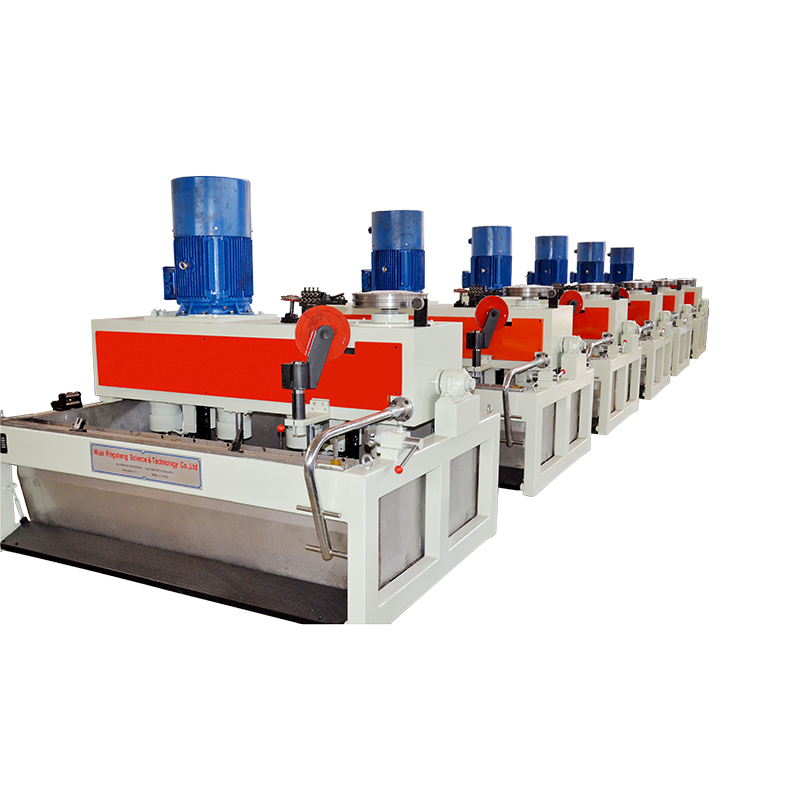
 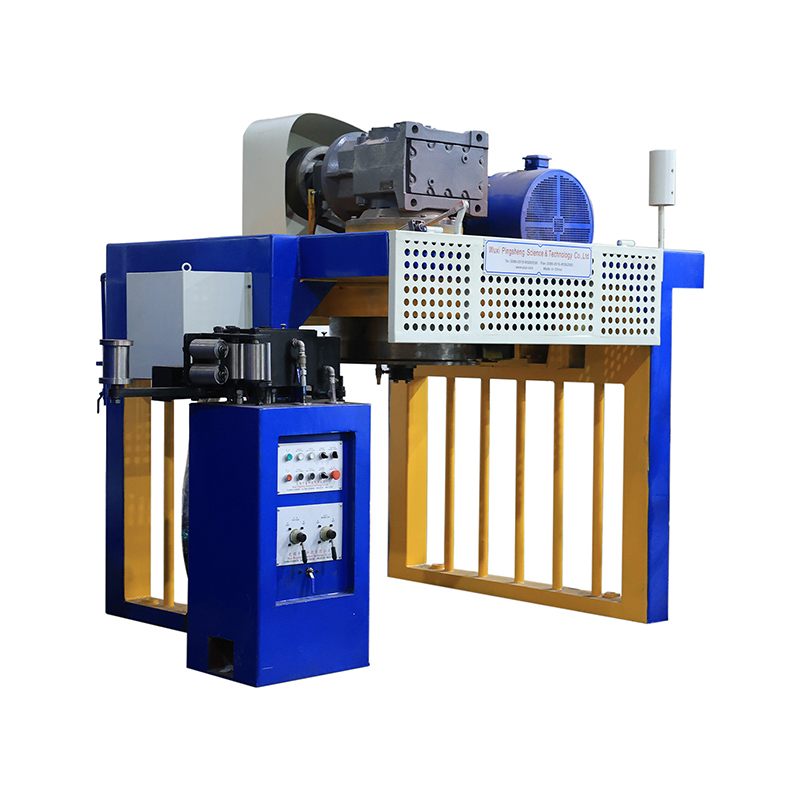 Inverted vertical wire drawing machine combined with single drawing blockThis unit combines single head straight line and inverted vertical drawing line, inverted vertical machine has the function of wire drawing and take-up.View Product →
When a Combined Configuration Earns Its Cost
Adding a single drawing block to a vertical machine is not a gimmick, and it is not for everyone. The reasoning is practical: a drawing sequence that needs one more reduction step, or a finishing pass that behaves differently from the main drafts, would otherwise demand either a second machine or an uncomfortable compromise in the reduction schedule.
The combined configuration solves that with hardware. The vertical block carries the main work, and the single drawing block picks up the extra stage under its own control. In practice this gives a production planner room to shift the balance between drafts when a wire grade changes, instead of re-engineering the whole line. It is the sort of flexibility that pays for itself on a plant running several wire specifications through the same bay.
It is also the configuration we ask the most questions about before quoting, because whether it helps depends entirely on your reduction schedule, your spool sizes and the surface quality your customers specify. None of those can be guessed from a catalogue.
High-Carbon and PC Wire: The Application We Name Explicitly
One application appears by name in our product list: a straight line wire drawing line for high-carbon wire and PC wire. PC wire is industry shorthand for prestressed concrete wire, a product where strength, surface condition and dimensional consistency leave very little room for a machine that drifts. High-carbon steel is a demanding material to draw — it work-hardens quickly, it punishes poor die alignment, and it reveals every irregularity of tension in the finished coil.
That is why this machine is presented as a line rather than as an isolated unit. Payoff, drawing, cooling and take-up are considered together, and the electrical control configuration is part of the design from the beginning rather than an afterthought bolted on at the end of assembly.
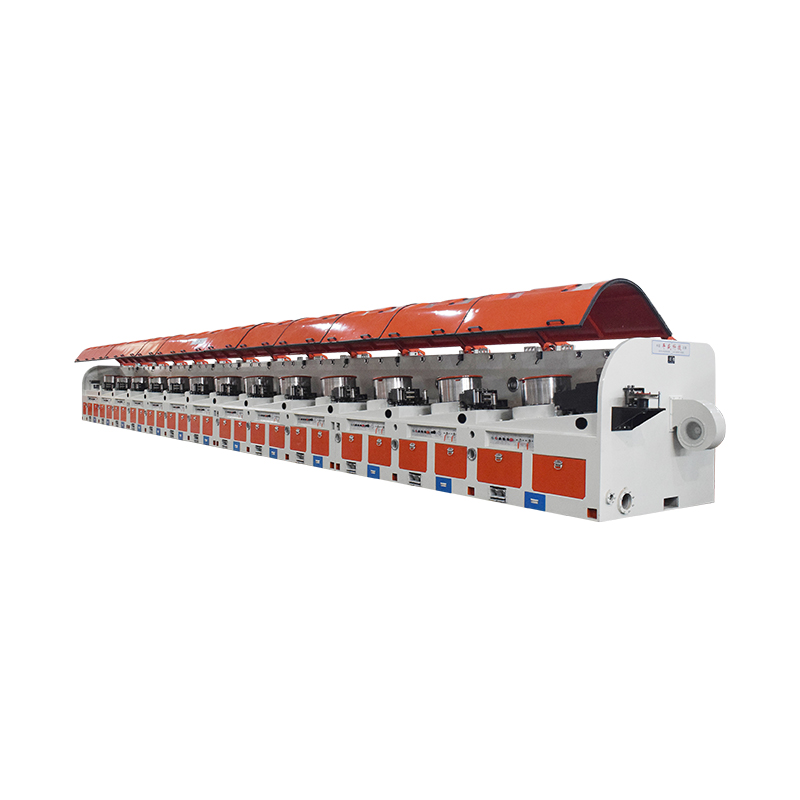
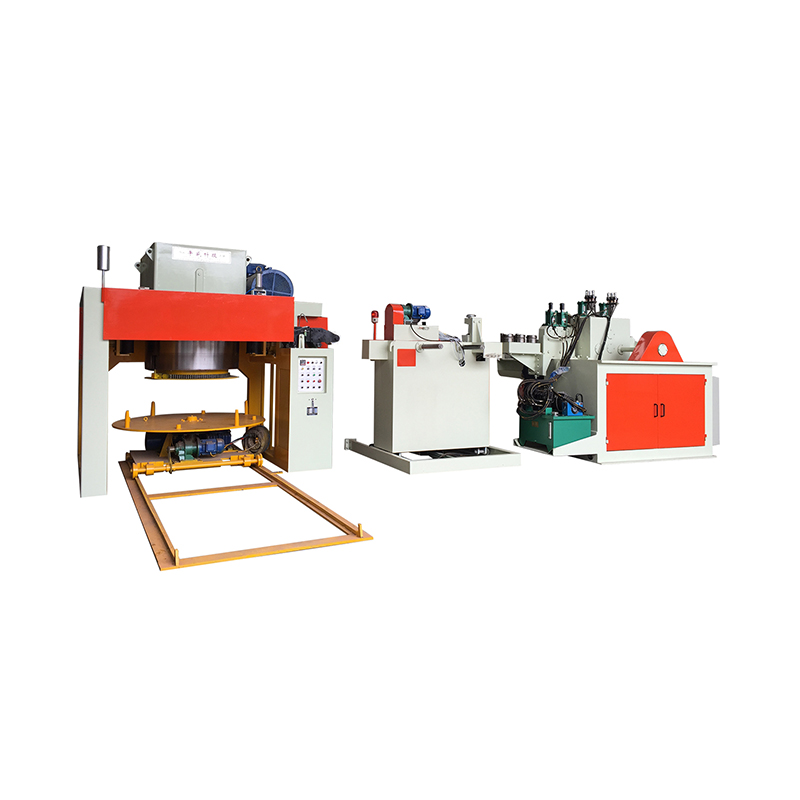
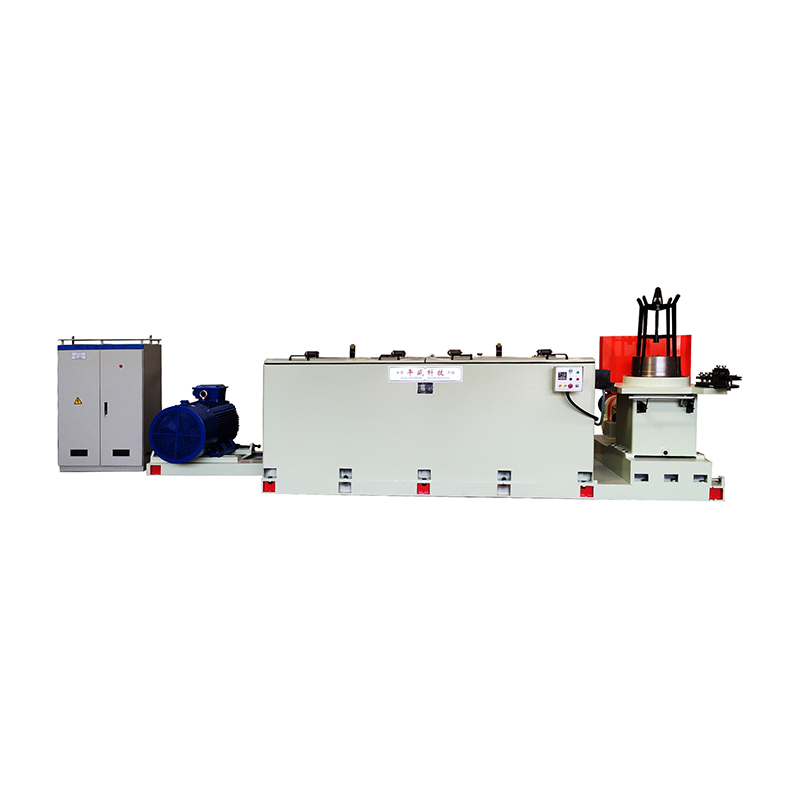
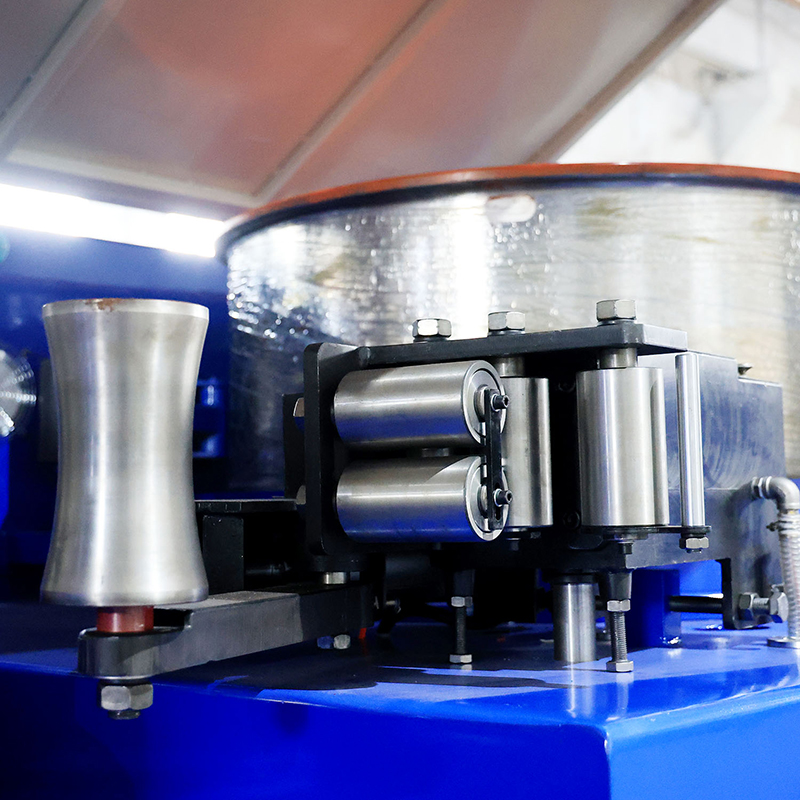 High carbon wire PC wire straight line wire drawing lineStraight line wire drawing line for high carbon wire pc wire is the line that specialized in high carbon wire, prestressed concrete wire/PC wire, PC profiling wire, PC...View Product →
Completing the Line: Payoff, Take-Up and Surface Treatment
Buying the drawing machine is the middle of the story. A line that draws perfectly but pays off badly still produces bad wire, because tension variation introduced at the payoff stand travels all the way downstream and shows up in the coil the customer receives.
This is why we supply payoff machines, take-up machines, surface treatment equipment and other auxiliary machinery as their own product categories rather than as accessories. Each one has to be matched to the drawing section: the payoff stand has to release wire smoothly at line speed without snatching, the take-up has to wind a coil that holds its shape and releases cleanly, and surface treatment has to be positioned where it does its job without interrupting the flow of the line.
Whether you are building a complete drawing bay from scratch or filling a gap beside a machine you already run, it helps to treat the drawing machine and its neighbours as one system. That is the approach our engineers take when a customer sends a process description rather than a part number.
Controls, Automation and Safe Operation
We describe our machines as having both a mechanical structure and an electronic control configuration, with designs aimed at stable running, safe and reliable operation, and straightforward maintenance. We also describe our equipment as widely used with numerical control technology and intelligent methods. That is how we see the direction of the industry: not automation for its own sake, but fewer manual interventions, tighter tension windows and fewer metres of scrap at the start of a shift.
Automation does not excuse anyone from the basics, though. Machine guarding, correct die fitting, sound electrical practice and a disciplined start-up routine still decide whether a shift ends quietly. Our technical articles cover this ground in detail, including practical guidance on the safe operation of wire drawing machines, and we would rather a customer read them before installation than after an incident.
Certificates, Claims and the Numbers We Can Prove
Our About page states that we hold ISO 9001 quality management system certification dated 2023, together with a patent certificate, and our site keeps a Certificate section for documents of this kind. What we cannot do is hand over a finished specification sheet for a machine that has not yet been configured for your wire, and we would be suspicious of anyone who could.
You may also notice that some counters in our Factory Overview section still read as placeholders. Treat those as unfinished web work rather than as a statement about our factory area or team size. If scale figures matter to your procurement process, ask us directly and we will answer directly.
On after-sales support, the commitment we publish is straightforward: we serve metal products manufacturers at home and abroad with drawing machines, auxiliary equipment and after-sales service. The scope of that service, and how it is delivered in your region, is best settled in writing as part of the order.
What to Send Us Before You Ask for a Quote
A quotation built on incomplete information is a guess with a price attached. Nine details will let us recommend a configuration honestly and price it sensibly:
- Wire material and grade, for example high-carbon steel, PC wire, or another metal.
- Inlet diameter, finished diameter and any intermediate sizes.
- The number of drafts you expect, or the reduction schedule you want to hold.
- Target line speed and the annual tonnage the line has to deliver.
- Lubrication or cooling arrangements available in your plant.
- Whether you have a machine type in mind — inverted vertical, straight line, wet or pulley type — or want a recommendation.
- Payoff and take-up spool or coil dimensions and weights.
- Control and automation expectations, including how the machine must connect to the rest of your line.
- Site conditions: floor space, headroom, power supply and ambient conditions.
Send those and you will get a straight answer about what fits, what does not, and why.
Since 1985 we have built drawing machines for metal products manufacturers who measure us by the coils that leave their plants, not by the wording on our home page. If you are comparing inverted vertical wire drawing machine factories, we would rather be judged on the questions we ask than on the adjectives we print.
Send us your wire data and we will tell you honestly whether a vertical machine, a straight line machine or a wet machine belongs on your line — and what it will take to keep it running for the next decade.